
Why Businesses Are Increasingly Supporting Federal EPR
Business innovation can reduce plastic waste and improve circularity. Policy is needed to scale it.

Companies across the consumer goods sector have spent years working to reduce plastic waste. Those efforts have produced meaningful progress. But those efforts have also revealed a hard truth: many of the barriers that limit progress are structural and cannot be addressed by individual companies alone.
As policymakers consider how to address plastic waste, one lesson from the business community is clear. Voluntary action can drive innovation and improvement, but transforming the broader system requires policy frameworks that align incentives and responsibilities across markets.
In this post, we look at what the business community has learned from years of voluntary action on plastic packaging, and why many companies support well-designed EPR policies and are seeking a harmonized, national approach to deliver the best circularity outcomes efficiently.
What Voluntary Action Has Achieved
Over the past decade, many companies have made a more focused effort to rethink how their packaging is designed and used. Across industries, brands and retailers have worked to reduce packaging, increase recycled content, test reusable and refillable product and packaging models, and develop new products and delivery systems to keep plastic in circulation longer. The results show that coordinated voluntary action can deliver real progress.
According to the latest Ellen MacArthur Foundation (EMF) Global Commitment Progress Report, companies participating in the initiative have avoided using 14 million tonnes of virgin plastic since the effort began – effectively keeping one barrel of oil in the ground every second. Together, they have tripled the use of recycled content in their packaging and eliminated billions of problematic plastic items from the waste stream.
These outcomes demonstrate that when companies set shared goals and invest in new approaches, innovation follows.
At the same time, they also highlight an important reality. Companies participating in the Global Commitment represent roughly 20 percent of the global plastic packaging market. While many of these businesses have made significant progress, the remaining 80 percent of the market has moved far more slowly. As the EMF notes in its recap of the initiative’s first phase, voluntary commitments from leading companies are necessary but insufficient to transform the entire system.
This is where policy plays a critical role.

Where Progress Depends on the System
Companies can and should redesign packaging. They can reduce materials use, incorporate recycled content and pilot new models such as concentrates or refill systems. But many of the changes needed to address plastic waste involve parts of the system that no single company controls.
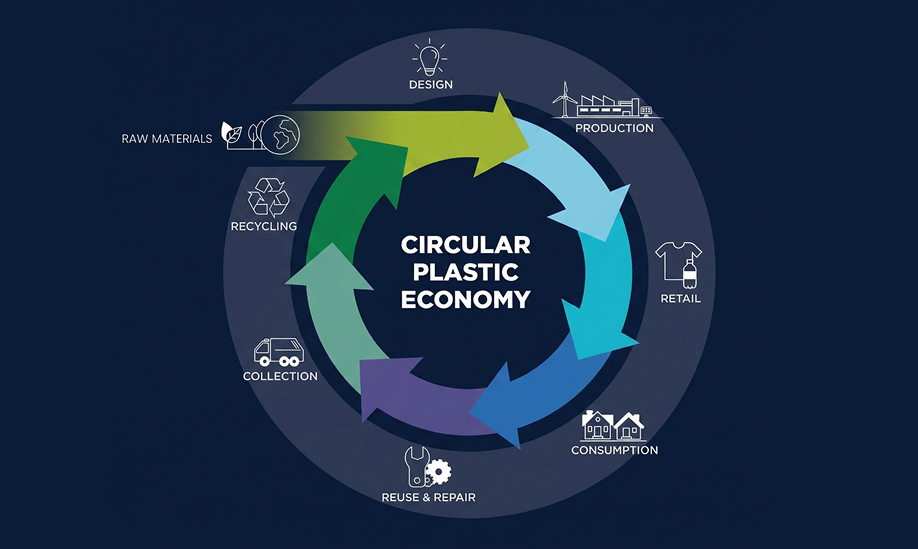
Building modern collection and recycling infrastructure, scaling reuse systems, addressing difficult materials such as flexible packaging and creating stable markets for recycled materials all require coordination across the packaging value chain. They also require a level of policy consistency that voluntary action alone cannot provide.
One challenge companies increasingly encounter is the growing patchwork of state requirements. In the United States, most packaging is produced by a relatively small number of companies and distributed nationally. Yet the rules governing how that packaging is managed at the end of its life increasingly vary from state to state.
Different definitions of who qualifies as a “producer,” different lists of covered materials and different reporting requirements all add complexity and cost. When those rules diverge, companies face a patchwork of requirements that makes it harder to design packaging, build infrastructure and invest with confidence across the market.
Circular systems work best when the incentives and expectations are aligned. The more harmonized those systems are, the easier it becomes for companies, recyclers and communities to work toward shared outcomes.
A Lesson From Experience
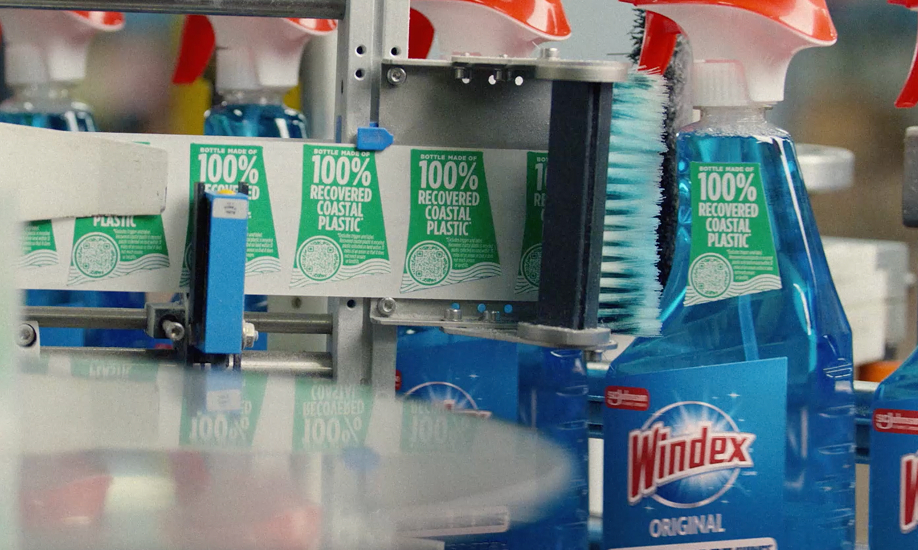
At SC Johnson, we have been working to reduce plastic waste for decades. In 1990, we introduced our first bottle made from 100 percent recycled plastic. More than a decade ago, we launched Windex concentrate refills that allow consumers to reuse the same spray bottle dozens of times. Since then, we have continued to introduce innovations designed to reduce plastic use and increase recycled content in our packaging.
Some of these innovations have worked well. Others have struggled to gain traction in the marketplace. That experience has reinforced an important lesson: even when companies innovate, the broader system does not always reward those choices.
Post-Consumer Recycled (PCR) plastic content, for example, can cost significantly more than virgin plastic, depending on market conditions. When those price gaps widen, companies trying to incorporate PCR into their products can find themselves at a competitive disadvantage. At the same time, PCR availability can vary widely depending on local collection and processing capabilities.
Despite these challenges, companies continue to move forward. SC Johnson reached 25 percent PCR plastic in our packaging globally in 2025. But progress like this often requires navigating cost pressures, infrastructure limitations and inconsistent policy signals – factors that no single company can solve alone.
Creating the Conditions for Circular Systems to Scale
Plastic packaging moves through a complex ecosystem that includes material producers, packaging manufacturers, consumer goods companies, retailers, recyclers, waste haulers and the communities that manage waste and recycling systems. If any part of that system lacks the incentives, infrastructure or resources needed to participate effectively, the entire system becomes less efficient.
That is why many companies, especially those that are a part of coalitions such as the EPR Leadership Forum and the Business Coalition for a Plastic Treaty, increasingly believe that voluntary action must be paired with policy frameworks, such as EPR, that align expectations and responsibilities across the market.
When thoughtfully designed, a harmonized national framework can create consistency and shared responsibility across the packaging value chain. They ensure that the companies placing packaging on the market contribute to the systems that collect and manage it at the end of its life. Just as importantly, a harmonized national framework can provide the long-term certainty businesses need to invest in better packaging design, expanded recycling infrastructure and new circular technologies.
For policymakers, this represents a practical opportunity. By creating consistent rules and incentives across the system, legislators can help turn the progress companies have already begun into measurable outcomes at scale.
The business community has shown that progress is possible. But experience increasingly shows that the most lasting progress comes when innovation, infrastructure and policy evolve together.
In the posts ahead, we will explore how collaboration among businesses, NGOs and policymakers can help build the aligned systems needed to reduce plastic waste and move closer to a circular economy.