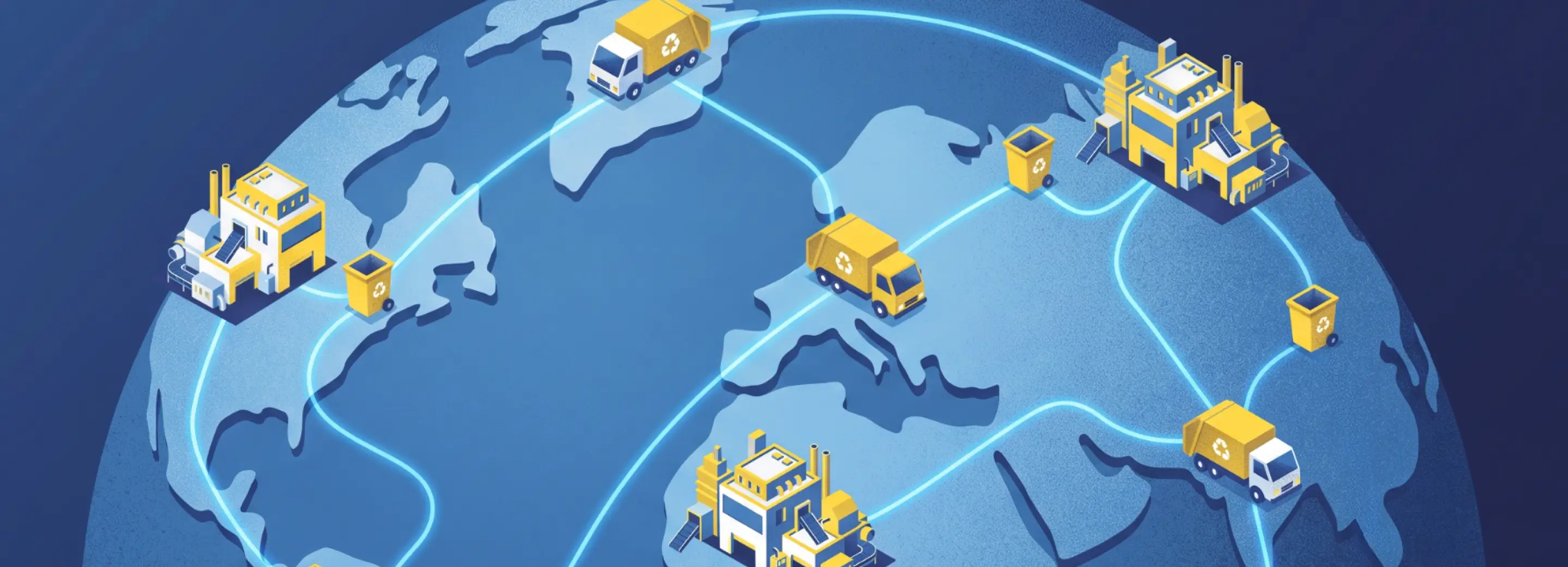

WWF's vision is no plastic in nature, and reaching it means fixing a broken system, not just cleaning up its results. That takes smart policy, corporate action and everyday action working together.
Our previous post explored what a plastic and packaging EPR buildout could mean for jobs, infrastructure and local budgets. Here, we look at the evidence behind RTI International's analysis modeling and what its state-level examples reveal about balancing national consistency with local needs.
What International Precedents Show
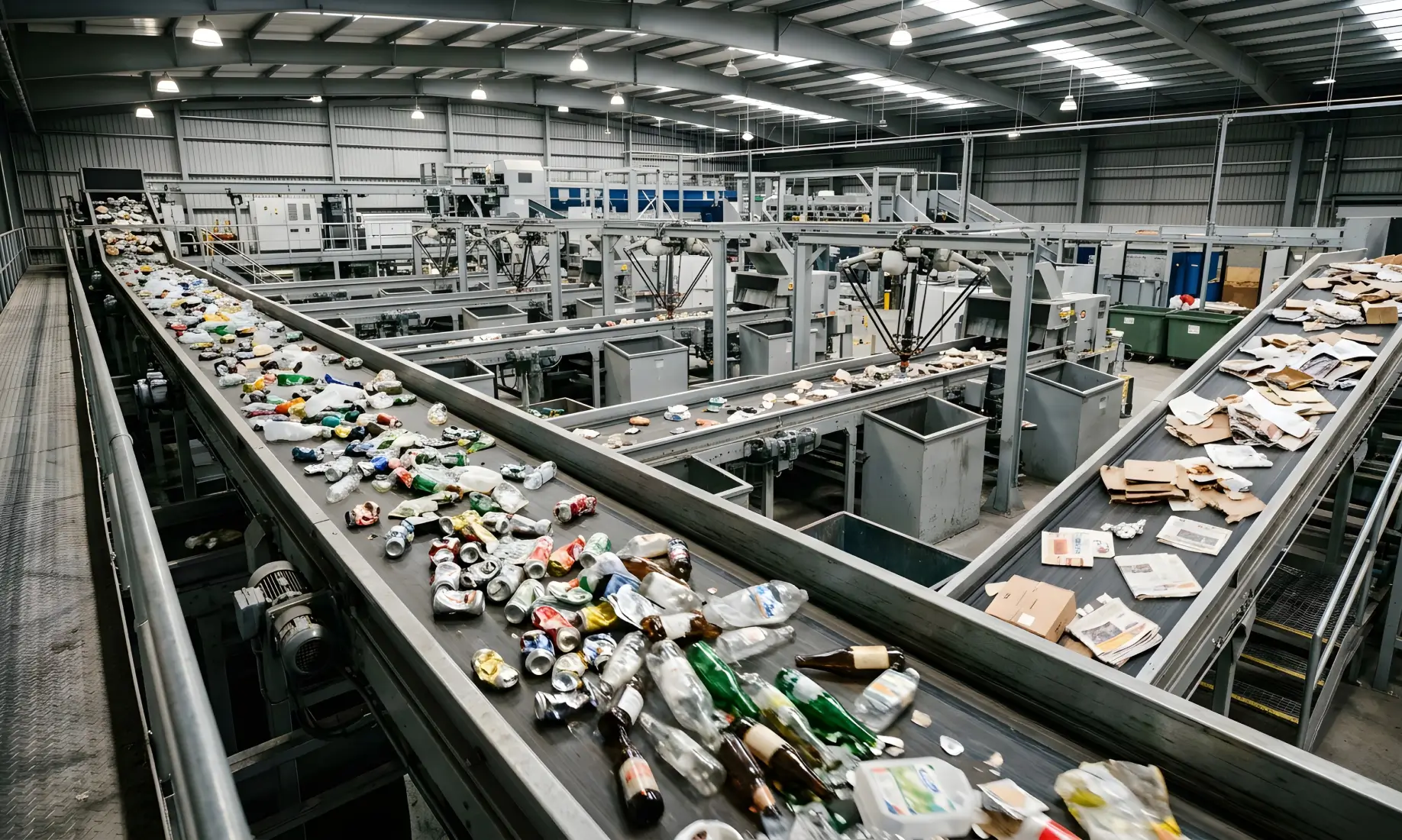
Plastic and packaging EPR programs are still in the early stages of implementation in several U.S. states, so their longer-term effects on infrastructure investment, education and outreach, and innovation are not yet clear. To inform its modeling, RTI looked at EPR systems with longer operating histories, using those results to benchmark its scenario of a 30-percentage-point increase in recycling rates over 10 years.
Those results vary. Germany's recycling rate rose 39 points from 1991 to 2016 under EPR. Portugal and Spain saw plastic recycling gains of 39 and 35 points. France and Italy gained roughly 10 and 8 points from 2008 to 2018. These examples provide an evidence-based benchmark for the RTI’s modeled 30-point increase, which it applies to each state's starting point.
Recycling rates are only one measure. In British Columbia, EPR programs generated a net 900 jobs in the province in 2014 and avoided an estimated CAD 32.2 million in collection and landfill costs. South Korea's EPR expansion created an estimated 4,260 jobs between 2003 and 2007. European research also points to design features, including harmonized standards and eco-modulation, as drivers of innovation.
These international examples help ground RTI's modeling in real-world experience. They show that its 30-point scenario falls within the range of outcomes observed elsewhere. However, differences in markets, infrastructure and policy design mean those results cannot be assumed for the United States.
What we’re seeing in the states
The case studies reveal another important lesson: a common national goal does not mean every state needs the same investments. Different starting points, infrastructure and access gaps require different approaches.
Georgia would move from 13% to 43%. The state has 12 residential MRFs and strong curbside participation where service exists, yet 38% of households lack access to recycling. Reaching the target would take three hub-and-spoke systems, seven additional MRFs and more than $80 million in upgrades. RTI estimated about 1,510 short-term jobs and $259 million in early activity, then about 1,200 ongoing jobs, $341 million annually and $21 million in annual tax revenue.
In Texas, with its larger population and material volume, the buildout is the biggest of the five: seven new MRFs and more than $200 million in upgrades, supporting about 3,360 ongoing jobs and $1.1 billion in annual economic contribution. In West Virginia, where low-density geography drives up costs, it is smaller: two MRFs and more than $15 million in upgrades, supporting about 190 ongoing jobs and $42 million annually.
The same 30-point goal calls for very different investments, and these states’ cases model the infrastructure and economic activity associated with expanded EPR systems; they do not independently establish the additional economic benefits of national harmonization. Georgia needs seven new MRFs, while West Virginia needs two. Funding or rules designed for one state's gaps would over-build in one place and under-build in another.
There is also a common thread. In Georgia, Texas and West Virginia, roughly a third of households (32% to 38%) lack access to recycling services, so the first job in each is getting recycling to people who don’t have it. That is why a national EPR framework works best when it sets shared tools and metrics and lets states match funding to their own gaps. These state cases illustrate the scale of activity associated with the modeled outcomes. They do not independently measure the added benefit of harmonization, which RTI examines separately through producer compliance costs.
Why This Matters for a National EPR Framework
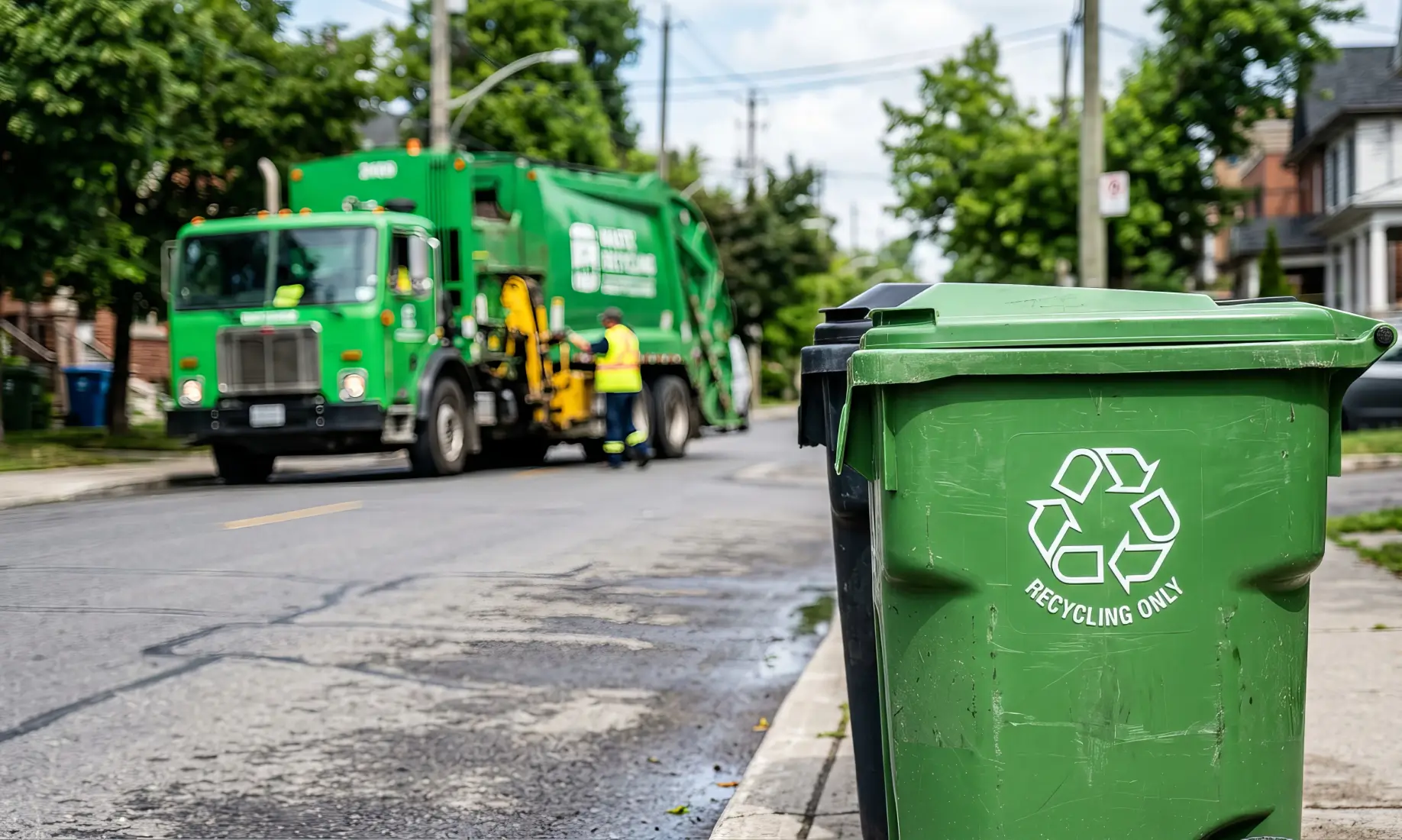
WWF advocates for action at every level: Congress, states and the global stage. This analysis shows how communities across those levels might benefit. A national framework can establish common definitions, targets and reporting while allowing states to develop programs around their communities’ need. National consistency does not require identical programs or infrastructure in every state, and national consistency and local flexibility are not competing approaches. Common national expectations on definitions, targets and reporting, paired with the flexibility for states to build what their communities’ needs, give policymakers a more efficient path.
National consistency also has economic implications. Based on estimates from nine large companies, RTI modeled annual administrative compliance costs of approximately $4.3 million for an average producer under one harmonized framework, compared with $5.1 million under ten different frameworks and $8.3 million under 50 unique state frameworks. While these scenarios do not predict how state policies will evolve, they illustrate how greater fragmentation can increase administrative complexity and costs. Reducing that complexity can help keep attention and resources focused on improving collection, infrastructure, education and other system outcomes.
Policy is one lever. Companies that invest and redesign, and people who use and advocate for better systems, are the others. EPR can fund the infrastructure and set the incentives, and communities bring it to life.
Higher recycling rates reduce plastic pollution and keep more valuable material in use, while driving jobs, investment and tax revenue in communities. Reuse is another pathway to drive economic value for communities, especially in closed-loop settings that anchor local reuse infrastructure and support adoption by other businesses. Reaching a 30-point recycling rate increase looks different in every state, but the benefits, for nature and for local economies, are shared across all of them. A national EPR framework offers a more efficient way to get there, reducing the burden on states, producers, and taxpayers, while keeping the flexibility to build what each community needs.